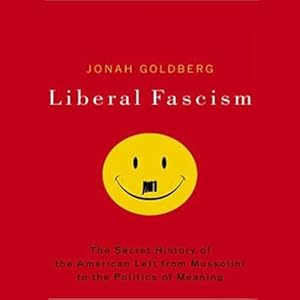
More of why I find the Teddy Roosevelt administration to be the first National Socialist regime of the 20th century, contrary to Jonah Goldberg's findings in Liberal Fascism that the Wilson administration was first.
On the checklist of National Socialism, the TR regime was around too early to be an anti-Communist band of Socialists. However, TR was every bit as anti-Capitalist (Free-Market variety) as Mussolini, Wilson, Hitler, or Franco.
The article mentions some nonsense that TR has the "deepest solicitude" for individualism, tucked in the center, middle of the center column even, of all of TR's collectivism and desire for state control of business.
Click and zoom the article if you like, or read it at the NYT.

Update 15 JUN 2012: In the article the NYT quotes points from Theodore Roosevelt's September 1913 article in The Century Magazine titled The Progressive Party. Read the whole thing here or at the source:
THE PROGRESSIVE PARTY1BY THEODORE ROOSEVELT
THE National Progressive Party was born in Chicago, August 5, 1912, at a convention which nominated Roosevelt for the presidency. Since that time, though defeated in the national election, it has figured more and more in the legislative and political activities of State and Nation. In fact progressivism is the one altogether incalculable element in the political situation of this country at a time when all men are peering, puzzled and anxious, into the mists of the future. At THE CENTURY'S request Mr. Roosevelt prepared the following paper for the thoughtful attention of the people of this land. It is crowded with suggestion.—THE EDITOR.
Fundamentally the reason for the existence of the Progressive party is found in two facts: first, the absence of real distinctions between the old parties which correspond to those parties; and, second, the determined refusal of the men in control of both parties to use the party organizations and their control of the Government for the purpose of dealing with the problems really vital to our people.
As to the first fact, it is hardly necessary to point out that the two old parties to-day no longer deal in any real sense with the issues of fifty and sixty years ago. At that time there was a very genuine division-line between the Republicans and the Democrats. The Republicans of those years stood for a combination of all that was best in the political philosophies of both Jefferson and Hamilton; and under Lincoln they represented the extreme democratic movement which was headed by Jefferson and also that insistence upon national union and governmental efficienq - which were Hamilton's great contributions to our political life in. the formative period of the republic. The Republicanism of that day was something real and vital, and the Republican party under Lincoln was the radical party of the country, abhorred and distrusted by the reactionaries and ultraconservatives, especially in the great financial centers, precisely as is now true of the Progressives. The Democratic party of that day, on the contrary, was no longer the party either of Jefferson or of Jackson, whose points of unlikeness were at least as striking as their points of likeness, and in the world of politics stood for slavery and for such development of the extreme particularistic doctrine euphoniously known as "States' rights," as to mean, when carried to its logical extreme, total paralysis of governmental functions and ultimately disunion.
The outbreak of the Civil War and its successful conclusion forced the majority of the conservative class of the North into the "Republican ranks" for when national dissolution is an issue, or even when any serious disaster is threatened, all other issues sink out of sight when compared with the vital need of sustaining the National Government. There is no possibility of even approximating to social and industrial justice if the National Government shows itself impotent to deal with malice domestic and foreign levy.
On the other hand, after the Civil War, the Democratic party found its position one of mere negation or mere antagonism to the Republican party. The Democrats in the Northern States had very different principles in the East and the West, and both in the East and the West alike they had nothing in common with the Democrats of the South save the bond of hatred to Republicanism.
OLD PARTIES AND NEW ISSUES
Under such conditions it was inevitable that after the issues raised by the war were settled, and as year by year they tended more and more to become nebulous memories, the new issues which arose should divide the parties each within itself rather than serve as a basis for true party division. The bonds were those of name, custom, and tradition rather than of principle. Each party could pride itself on fervent fixity of opinion as regards the issues that were dead, but each party showed complete indecision of purpose in dealing with the problems that were living. A party which alternately nominated Mr. Bryan and Mr. Parker for President, and a party wherein Messrs. Penrose, La Follette, and Smoot stand as the three brothers of leadership, can by no possibility supply the need of this country for efficient and coherent governmental action as regards the really vital questions of the day. Each party contains within its leadership and membership men who are hopelessly sundered by whatever convictions they really hold and who act together simply for reasons of personal or party expediency. It is impossible to secure the highest service for the people from any party which, like the Democracy, is wedded to States' rights, as against those peoples' rights which can be obtained only by the exercise of the full power of the National Government. On the other hand it is utterly hopeless to expect any sincerity of devotion to any principle of concern to the people as a whole from a party the machinery of which is usurped and held by the powers that prey, in the political and business world; and this has been the case with the Republican party since the bosses in June, 1912, at Chicago stole from the rank and file their right to make their own platform and nominate their own candidates.
So much for the incongruous jumble of conflicting principles and policies within each party and the lack of real points of difference between them. Their showing on this point is so bad that by sheer force of habit our people have grown to accept as a matter of course and without surprise the situations to which it gives rise. For instance, in New York State there was very little genuine surprise among the people as a whole when in the legislature the Republican adherents of the Republican boss and the Democratic adherents of the Democratic boss, after deliberate caucus and conference, repudiated their preelection pledges as to primary legislation, and joined with hearty good will to defeat the measure which both had promised to support. It would be difficult to imagine a better instance of the way in which our present party conditions insure the absolute powerlessness of the people when faced by a bipartizan combine of the two boss-ridden party machines, whose hostility each to the other is only nominal compared to the hostility of both to the people at large.
SOCIAL AND ECONOMIC CHANGES
The second fundamental fact of the situation partly depends upon this first fact. Where neither party ventures to have any real convictions upon the vital issues of the day it is. normally impossible to use either as an instrument for meeting these vital issues. Most of these issues, at least in their present form, have become such during the lifetime of the present generation. There are, of course, issues of which this is not true. The need of fortifying the Panama Canal and of building and maintaining a thoroughly efficient navy of adequate size, find their justification in the policy of Washington, for instance, and neither policy can be antagonized save by those who are the heirs of Washington's bitterest and most insidious opponents. Again, the questions arising in connection with our international relations must to-day, as always, be settled exactly along the lines of general policy laid down by Washington, under penalty of risking grave national discredit and disgrace.
But most of the issues which nine times out of ten most concern the average man and average woman of our republic have reached their present form only within the lifetime of the men who are now of middle age. They are due to the profound social and economic changes of the last half-century, to the exhaustion of the soil and of our natural resources, to the rapid growth of manufacturing towns and great trading cities, and to the relative lowering of the level of life in many country districts, both from the standpoint of interest and the standpoint of profit. Whether we approach the problem having in view only the interests of the wage-worker or of the farmer or of the small business man, or having in view the interests of the public as a whole, we are obliged to face certain new facts. One is that in their actual workings the old doctrines of extreme individualism and of a purely competitive industrial system have completely broken down. Another is that if we are to grapple efficiently with the evils of to-day, it will be necessary to invoke the use of governmental power to a degree hitherto unknown in this country, and, in the interest of the democracy, to apply principles which the purely individualistic democracy of a century ago would not have recognized as democratic.
It is utterly useless to try to meet our needs by recreating the vanished conditions which rendered it possible for this vanished individualistic democracy to preach and practise what it did, and which preaching and practising of an extreme individualism, be it remembered, laid the corner of the very conditions against which we are in revolt to-day. The present-day need of our people is to achieve the purpose our predecessors in the democratic movement had at heart, even'though it be necessary to abandon or reverse the methods by which they in their day sought to realize, and indeed often did realize, that purpose. The Progressive party is the only political instrumentality in exisfence to-day which recognizes the need of achieving this purpose by the new methods which under the changed industrial and social conditions are alone effective.
COLLECTIVE ACTION AND THE INDIVIDUAL
This means increased efficiency of governmental action. It does not mean in the slightest degree any impairment or weakening of individual character. The combination of efficient collective action and of individual ability and initiative is essential to the success of the modern state. It is in civil life as it is in military life. No amount of personal prowess will make soldiers collectively formidable unless they possess also the trained ability to act in common for a common end. On the other hand, no perfection of military organization will atone for the lack of the nghting edge in the man in the ranks. The same principle applies in civil life. We not merely recognize but insist upon the fact that in the life career of any man or any woman the prime factor as regards success or failure must be his or her possession of that bundle of qualities and attributes
which in their aggregate we denominate as character; and yet that, in addition, there must be proper social conditions surrounding him or her.
Recognition of and insistence upon either fact must never be permitted to mean failure to recognize the other and complementary fact. The character of the individual is vital, and yet, in order to give it fair expression, it must be supplemented by collective action through the agencies of government. Our critics speak as if we were striving to weaken the strength of individual initiative. Yet these critics, who for the most part are either men of wealth who do not think deeply on subjects unconnected with the acquisition of wealth, or else men of a cloistered intellectualism, are themselves in practice the very men who are most ready to demand the exercise of collective power in its broadest manifestation; that is, through the police force, when there is danger of disorder or violence.
The growth in the complexity of community life means the partial substitution of collectivism for individualism, not to destroy, but to save individualism. A very primitive country community hardly needs a constable at all. As it changes into a village and then into a city, it becomes necessary to organize a police force, and this not because the average man has deteriorated in individual initiative and prowess, but because social conditions have so changed as to make collective action necessary. When New York was a little village, a watchman with a lantern and a stave was able to grapple with the only type of law-breaker that had yet been developed. Nowadays, in place of this baggy-breeched, stave-and-lantern carrier, we have the complex machinery of our police department, with a personnel ranging from a plain-clothes detective to a khaki-clad mounted officer with an automatic-repeating pistol. As the complexity of life has grown, as criminals have become more efficient and possessed of a greater power of combined action, it has been necessary for the government to keep the peace by the development of the efficient use of its own police powers. It is just the same with many matters wholly unconnected with criminality. The government has been forced to take the place of the individual in a hundred different ways; in, for instance, such matters as the prevention of fires, the construction of drainage systems, the supply of water, light, and transportation. In a primitive community every man or family looks after his or its interest in all these matters. In a city it would be an absurdity either to expect every man to continue to do this, or to say that he had lost the power of individual initiative because he relegated any or all of these matters to the province of those public officers whose usefulness consists in expressing the collective activities of all the people.
THE SOCIAL GOAL
In other words, the multiplication of activities in a highly civilized and complex community is such that the enormous increase in collective activity is really obtained not as a substitute for, but as an addition to, an almost similar increase in the sphere of individual initiative and activity. There are, of course, cases of substitution; but, speaking roughly and on the whole, the statement as above made is accurate. The increase of collective activity for social and industrial purposes does not mean in any shape or way a deadening of individual character and initiative such as would follow on the effort virtually to apply the doctrines of the Marxian socialists; for "socialist" is a term so vague, and includes so many men working wisely for justice, that it is necessary to qualify it in order to define it. We are striving in good faith to produce conditions in which there shall be a more general division of material well-being, to produce conditions under which it shall be difficult for the very rich to become so very rich, and easier for the men without capital, but with the right type of character, to lead a life of self-respecting and hard-working well-being. The goal is a long way off, but we are striving toward it; and the goal is not socialism, but so much of socialism as will best permit the building thereon of a sanely altruistic individualism, an individualism where selfrespect is combined with a lively sense of consideration for and duty toward others, and where full recognition of the increased need of collective action goes hand in hand with a developed instead of an atrophied power of individual action.
Now, it is fairly easy to gain a more or less half-hearted acceptance of these views as right in the abstract. All that the Progressive party is endeavoring to do is to apply them in the concrete.
THE REPUBLICAN DIFFERENCE
We are sundered from the men who now control and manage the Republican party by the gulf of their actual practices and of the openly avowed or secretly held principles which rendered it necessary for them to resort to these practices. The rank and file of the Republicans, as was shown in the spring primaries of 1912, are with us; but they have no real power against the bosses, and the channels of information are so choked that they are kept in ignorance of what is really happening. The doctrines laid down by Mr. Taft as law professor at Yale give the theoretical justification for the practical action of Mr. Penrose and Mr. Smoot. The doctrines promulgated by Mr. Nicholas Murray Butler, when he writes Mr. Barnes's platform, serve to salve the consciences at those who, although they object to bossism on esthetic grounds, yet sincerely feel that governmental corruption is preferable to the genuine exercise of popular power. This acquiescence in wrong-doing as the necessary means of preventing popular action is not a new position. It was the position of many upright and well-meaning Tories who antagonized the Declaration of Independence and the movement which made us a nation. It was the position of a portion of the very useful Federalist party, which at the close of the eighteenth century insisted upon the vital need of national union and governmental efficiency, but which was exceedingly anxious to devise methods for making believe to give the people full power while really putting them under the control of a propertied political oligarchy.
The control of the Republican National Convention in June, 1912, in the interest of Mr. Taft was achieved by methods full of as corrupt menace to popular government as ballot-box stuffing or any species of fraud or violence at the polls. Yet it was condoned by multitudes of respectable men of wealth and respectable men of cultivation because in their hearts they regarded genuine control by what they called "the mob"—that is, the people—as an evil so great that compared with it corruption and fraud became meritorious. The Republican party of to-day has given absolute control of its destinies into the hands of a National Committee composed of fifty-three irresponsible and on the whole obscure politicians. It has specifically provided that these men, who have no responsibility whatever to the public, can override the lawfully expressed will of the majority in any state primary. It has perpetuated a system of representation at national conventions which gives a third of the delegates to communities where there is no real Republican vote, where no delegation for or against any man really represents anything, and where, in consequence, the National Committee can plausibly seat any delegates it chooses without exciting popular indignation. In sum, these fifty-three politicians have the absolute and unchallenged control of the National Convention. They do not have to allow the rank and file of the party any representation in that convention whatever, and, as has been shown in actual practice, they surrender to them any control whatever, on the occasion when they deem it imperatively necessary, merely as a matter of expediency and favor, and not as a matter of right or principle.
It is difficult to understand how under these conditions self-respecting men who in good faith uphold popular government can continue in the party. But it is entirely obvioxis why those in control of the party and its main supporters in the political, financial, and newspaper worlds advocate the system. They do it from precisely the same motives that actuate them in opposing direct primaries, in opposing the initiative and the referendum, in opposing the right of the people to control their own officials, in opposing the right of the people as against the right of the judges to determine what the Constitution, the fundamental law of the land, shall permit in the way of legislation for social and industrial justice. All persons who sincerely disbelieve in the right and the capacity of the people for self-rule naturally, and from their point of view properly, uphold a system of party government like that which obtains under the Republican National Committee. For precisely similar reasons they antagonize every proposal to give the people command of their own governmental machinery. For precisely similar reasons they uphold the divine right of the judiciary to determine what the people shall be permitted to do with their own government in the way of helping the multitudes of hard-working men and women of whose vital needs these well-meaning judges are entirely ignorant.
THE DEMOCRATIC DIFFERENCE
From the Democratic party as at present constituted we are radically divided both because of the utter incoherence within that party itself, and because the doctrines to which it is at present committed are either fundamentally false or else set forth with a rhetorical vagueness which makes it utterly futile to attempt to reduce them to practice. The Democratic party can accomplish nothing of good unless it deliberately repudiates its campaign pledges—unless it deliberately breaks the promises it solemnly made in order to acquire power. Such repudiation necessarily means an intellectual dishonesty so great that no skill in rhetorical dialectics can cover or atone for it. To win power by definite promises, and then seek to retain it by the repudiation of those promises, would show a moral unfitness such as not to warrant further trust of any kind. Therefore we must proceed upon the assumption that the leaders of the Democracy meant what they said when they were seeking to obtain office. Their only performance so far, at the time that this article is written, is in connection with the tariff and with a discreditable impotence in foreign affairs. As a means of helping to solve great industrial and social problems, the tariff is merely a red herring dragged across the trail to divert our people from the real issues. The present tariff bill has been handled by precisely the same improper methods by which the Payne-Aldrich law was enacted. The only safe way of treating the tariff, that of a permanent non-partizan, expert tariff commission, providing for a schedule by schedule reunion, was deliberately repudiated. The Payne-Aldrich tariff was a thoroughly bad bill; and therefore I am all the more sorry to see the principles of evil tariff-making which it crystallized repeated in the Underwood-Wilson bill.
The Democratic party specifically asserted that by correcting the evils of the tariff they would reduce the cost of living, help the wage-worker and farmer, and take the most important step necessary to the solution of the trust problem. So far, there has not been the smallest evidence that these results will follow their action; and unless such results do follow from it, the Democratic tariff policy will be proved an empty sham.
I have read with care Mr. Wilson's chapter in the "New Freedom" in which he professes to set forth his attitude as regards the trusts. The chapter does not contain, as far as I can find, one specific proposal for affirmative action. It does contain repeated, detailed, and specific misrepresentations of the Progressive position —misrepresentations so gross that all that is necessary in order to refute them is to challenge Mr. Wilson to produce a single line from the Progressive National platform, or from the speeches of the men who stood on that platform, which will bear out his assertions. Aside from these specific misrepresentations, there are various well-phrased general statements implying approval of morality in the abstract, but no concrete proposal for affirmative action. A patient and sincere effort to find out what Mr. Wilson means by the "New Freedom" leaves me in some doubt whether it has any meaning at all. But if there is any meaning, the phrase means and can mean only freedom for the big man to prey unchecked on the little man, freedom for unscrupulous exploiters of the public and of labor to continue unchecked in a career of cutthroat commercialism, wringing their profits out of the laborers whom they oppress and the business rivals and the public whom they outwit. This is the only possible meaning that the phrase can have if reduced to action. It is, however, not probable that it has any meaning at all. It certainly can have no meaning of practical value if its coiner will not translate it out of the realm of magniloquent rhetoric into specific propositions affecting the intimate concerns of our social and industrial life to-day. To discriminate against a very few big men because of their efficiency, without regard to whether their efficiency is used in a social or anti-social manner, may perhaps be included in Mr. Wilson's meaning; but this would be absolutely useless from every aspect, and harmful from many aspects, while all the other big unscrupulous men were left free to work their wicked will. The line should be drawn on conduct, not on size. The man who behaves badly should be brought to book, whether he is big or little; but there should be no discrimination against efficiency, if the results of the efficiency are beneficial to the wage-earners and the public.
THE PEOPLE'S RIGHTS
We have waited for a year to see such propositions made, and until they are made and put into actual practice, and until we see how they work, the phrase "New Freedom" must stand as any empty flourish of rhetoric, having no greater and no smaller value than all the similar flourishes invented by clever phrase-makers whose concern is with diction and not action. The problems connected with the trusts, the problems connected with child labor, and all similar matters, can be solved only by affirmative national action. No party is progressive which does not set the authority of the National Government as supreme in these matters. No party is progressive which does not give to the people the right to determine for themselves, after due opportunity for deliberation, but without endless difficulty and delay, what the standards of social and industrial justice shall be; and, furthermore, the right to insist upon the servants of the people, legislative and judicial alike, paying heed to the wishes of the people as to what the law of the land shall be. The Progressive party believes with Thomas Jefferson, with Andrew Jackson, with Abraham Lincoln, that this is a government of the people, to be used for the people so as to better the condition of the average man and average woman of the nation in the intimate and homely concerns of their daily lives; and thus to use the government means that it must be used after the manner of Hamilton and Lincoln to serve the purposes of Jefferson and Lincoln.
We are for the people's rights. Where these rights can best be obtained by exercise of the powers of the State, there we are for States' rights. Where they can best be obtained by the exercise of the powers of the National Government, there we are for national rights. We are not interested in this as an abstract doctrine; we are interested in it concretely. Wisconsin possesses advanced laws in the interest of labor. There are other States in this respect more backward, where wage-workers, and especially women and child wage-workers, are left at the mercy of greedy and unscrupulous capitalists. Wherever this operates unjustly to favor the capitalists of other less advanced States at the expense of Wisconsin, and therefore for business reasons to make state legislatures fearful of passing laws for the proper safeguarding of the life, health, and liberty of the wage-workers, then we believe that the National Government should step in and by national action secure in the interest of the wage-workers uniform conditions throughout the Union. We hold it to be the duty of the National Government to put all the governmental resources of our people, national and state, behind the movement for the wise and sane uplifting of the men and women whose lives are hardest.
We believe in the principle of a living wage. We hold that it is ruinous for all our people, if some of our people are forced to subsist on a wage such that body and soul alike are stunted. We believe in safeguarding the body of the wage-worker, and in providing for his widow and children if he falls a victim to industrial accident. We believe in shortening the labor day to the point that will tell most for the laborer's efficiency both as wage-worker and as citizen. In the Progressive National platform we inserted the following plank:
SOCIAL AND INDUSTRIAL JUSTICE
The supreme duty of the nation is the conservation of human resources through an enlightened measure of social and industrial justice. We pledge ourselves to work unceasingly in state and nation for:—
Effective legislation looking to the prevention of industrial accidents, occupational diseases, overwork, involuntary unemployment, and other injurious effects incident to
modern industry;
The fixing of minimum safety and health standards for the various occupations, and the exercise of the public authority of state and nation, including the federal control over interstate commerce and the taxing power, to maintain such standards;
The prohibition of child labor;
Minimum wage standards for working women, to provide a living scale in all industrial occupations;
The prohibition of night work for women and the establishment of an eight-hour day for women and young persons;
One day's rest in seven for all wage workers;
The eight-hour day in continuous twenty-four-hour industries.
The abolition of the convict contract labor system; substituting a system of prison production for governmental consumption only; and the application of prisoners' earnings to the support of their dependent families;
Publicity as to wages, hours and conditions of labor; full reports upon industrial accidents and diseases, and the opening to public inspection of all tallies, weights, measures and check systems on labor products;
Standards of compensation for death by industrial accident and injury and trade diseases which will transfer the burden of lost earnings from the families of working people to the industry, and thus to the community;
The protection of home life against the hazards of sickness, irregular employment and old age through the adoption of a system of social insurance adapted to American use;
The development of the creative labor power of America by lifting the last load of illiteracy from American youth and establishing continuation schools for industrial education under public control and encouraging agricultural education and demonstration in rural schools;
The establishment of industrial research laboratories to put the methods and discoveries of science at the service of American producers.
We favor the organization of the work- ers, men and women, as a means of protecting their interests and of promoting their progress.
These propositions are definite and concrete. They represent for the first time in our political history the specific and reasoned purpose of a great party to use the resources of the government in sane fashion for industrial betterment.
COUNTRY PROBLEMS
We do not believe in confining governmental activity to the city. We believe that the problem of life in the open country is well nigh the gravest problem before this nation. The eyes and thoughts of those working for social and industrial reform have been turned almost exclusively toward the great cities, and toward the solution of the questions presented by their teeming myriads of people and by the immense complexity of their life. Yet nothing is more certain than that there can be no permanent prosperity unless the men and women who live in the open country prosper. The problems of the farm, of the village, of the country church,
and the country school, the problems of getting most value out of and keeping most value in the soil, and of securing healthy and happy and well-rounded lives for those who live upon it, are fundamental to our national welfare. The first step ever taken toward the solution of these problems was taken by the Country Life Commission appointed by me, opposed with venomous hostility by the foolish reactionaries in Congress, and abandoned by my successor. Congress would not even print the report of this commission, and it was the public-spirited, farsighted action of the Spokane Chamber of Commerce which alone secured the pub-
lication of the report. The farmers must organize as business men and wage-workers have organized, and the Government must help them organize.
THE BUSINESS WORLD
In dealing with business, the Progressive party is the only party which has put forth a rational and comprehensive plan. We believe that the business world must change from a competitive to a cooperate basis. We absolutely repudiate the theory that any good whatever can come from confining ourselves solely to the effort to reproduce the dead-and-gone conditions of sixty years ago—conditions of uncontrolled competition between competitors most of whom were small and weak. The reason that the trusts have grown to such enormous size is to be found primarily in the fact that we relied upon the competitive principle and the absence of governmental interference to solve the problems of industry. Their growth is specifically
and precisely due to the practice of the archaic doctrines advocated by President Wilson under the pleasingly delusive title of the "New Freedom."
We hold that all such efforts to reproduce dead-and-gone conditions are bound to result in failure or worse than failure. The breaking-up of the Standard Oil Trust, for example, has not produced the very smallest benefit. It has merely resulted in enormously increasing the already excessive profits of a small number of persons. Not the smallest benefit would accrue—on the contrary, harm would result—if in dealing with the Steel Corporation we merely substituted for one such big corporation four or five smaller corporations of the stamp of the Colorado Fuel & Iron Company. The "Survey" published a study of the conditions of life and labor among the wage-workers of this company which it is not too much to describe as appalling. The effort to remedy conditions in connection with the trusts by the establishment, instead of one big company, of four such companies engaged in cutthroat competition, cannot work the smallest betterment, and would probably work appreciable harm. That kind of "new" freedom is nothing whatever but the old, old license for the powerful to prey on the feeble.
COMPETITION AND CORPORATIONS
There is a very real need of governmental action, but it should be action along a totally different line. The result of the unlimited action of the competition system is seen at this moment in the bituminous coal-mines of West Virginia, where the independent operators, in the ferocity of their unregulated competition, and partly because they are forbidden to combine even for useful purposes, seek their profit in the merciless exploitation of the wage-workers who toil for them. The law, in the strict spirit of the "new freedom," forbids them to combine for a useful purpose, and yet offers no check upon their dealing with their employees in a spirit of brutal greed. What is needed is thoroughgoing, efficient, and, if necessary, drastic supervision and control of the great corporations doing an interstate business, by means of a Federal administrative body akin in its functions to the Interstate Commerce Commission. This body should have power not only to enforce publicity, but to secure justice and fair treatment to investors, wage-workers, business rivals, consumers, and the general public alike.
Such an industrial commission should do as the Interstate Commerce Commission should do, that is, remember always its dual duty, the duty to the corporation and individual controlled no less than to the public. It is an absolute necessity that the investors, the owners, of an honest, useful, and decently managed concern, should have reasonable profit. It is impossible to run business unless this is done. Unless the business man prospers, there will be no prosperity for the rest of the community to share. He must have certainty of law and opportunity for honest and reasonable profit under the law.
Experience has proved that we cannot afford to leave the great corporations to determine for themselves without governmental supervision how they shall treat their employees, their rivals, their customers, and the general public. But experience has no less shown that it is as fatal for the agents of government to be unjust to the corporation as to fail to secure justice from them. In dealing with railways, for example, it is just as important that rates should not be too low as that they should not be too high. The living wage and the living rate are interdependent. In dealing with useful, honestly organized, and honestly managed railways, rates must be kept high enough to permit of proper wages and proper hours of labor for the men on the railroad, and to permit the company to pay compensation for the lives and limbs of those employees who suffer in doing its business; and at the same time to secure a reasonable reward to the investors—a reward sufficient to make them desirous to continue in this type of investment. Precisely the same course of action which should be followed in dealing with the railroads should also be followed by the Interstate Industrial Commission in dealing with the great industrial corporations engaged in interstate business.
TAXATION
We believe that great fortunes, even when accumulated by the man himself, are of limited benefit to the country, and that they are detrimental rather than beneficial when secured through inheritance. We therefore believe in a heavily progressive inheritance tax—a tax which shall bear very lightly on small or ordinary inheritances, but which shall bear very heavily upon all inheritances of colossal size. We believe in a heavily graded income tax, along the same lines, but discriminating sharply in favor of earned, as compared with unearned, incomes.
It would be needless and burdensome to set forth in detail all the matters, national, state, and municipal, to which we would apply our principles. We believe that municipalities should have complete self-government as regards all the affairs that are exclusively their own, including the important matter of taxation, and that the burden of municipal taxation should be so shifted as to put the weight of land taxation upon, the unearned rise in value of the land itself rather than upon the improvements, the buildings; the effort being to prevent the undue rise of rent. We regard it as peculiarly the province of the government to supervise tenementhouses, to secure proper living conditions, and to erect parks and playgrounds in the congested districts, and to use the schools as social centers.
THE PEOPLE AND THE LAWS
We hold that all the agencies of government belong to the people, that the Constitution is theirs, and that the courts are theirs. The people should exercise their power, not to overthrow either the Constitution or the courts, but to overthrow those who would pervert them into agents against the popular welfare. We believe that where a public servant misrepresents the people, the people should have the right to remove him from office, and that where the legislature enacts a law which it should not enact or fails to enact a law which it should enact, the people should have the right on their own initiative to supply the omission. We do not believe that either power should be loosely or wantonly used, and we would provide for its exercise in a way which would make its exercise safe; but the power is necessary, and it should be provided.
We hold, moreover, with the utmost emphasis, that the people themselves should have the right to decide for themselves after due deliberation what laws are to be placed upon the statute-books and what construction is to be placed upon the constitutions, national and state, by the courts, so far as concerns all laws for social and industrial justice. This proposal has nothing whatever to do with any ordinary case at law. It has nothing to do with the exercise by the judge of judicial functions, or with his decision in any issue merely between man and man. It has to do only with the exercise by the court of political and legislative functions. We believe that it is wise to continue the American practice of using the courts as a check upon the legislature in this manner, but only so long as it is possible, in the event of conflict between the legislature and the court, to call in as arbiter the people who are the masters of both legislature and court, and whose own vital interests are at issue. The court and the legislature alike are the servants of the people, and they are dealing with the interests of the people; and the people, the masters of both, have the right to decide between them when their own most intimate concerns are at stake.
The present process of constitutional amendment is too long, too cumbrous, and too uncertain to afford an adequate remedy, and, moreover, after the amendment has been carried, the law must once more be submitted to the same court which was, perhaps, originally at fault, in order to decide whether the new law comes within the amendment. Provision should be made by which, after due deliberation, the people should be given the right themselves to decide whether or not a given law passed in the exercise of the police power for social or industrial betterment and de- clared by the court to be unconstitutional, shall, notwithstanding this, become part of the law of the land. This proposal has caused genuine alarm and been treated as revolutionary; but opposition to it can proceed only from complete misunderstanding both of the proposal and of the needs of the situation. Of course, however, the selfish opposition of the great corpora-
tion lawyers and of their clients is entirely intelligent; for these men alone are the beneficiaries of the present reign of hidden, of invisible, government, and they rely primarily on well-meaning but reactionary courts to thwart the forward movement.
NO DIVINE RIGHT OF JUDGES
Concretely to illustrate just what we mean, our assertion is that the people have the right to decide for themselves whether or not they desire a workmen's compensation law, or a law limiting the number of hours of women in industry, or deciding whether in unhealthy bakeshops wage-workers shall be employed more than a certain length of time per day, or providing for the safeguarding of dangerous machinery, or insisting upon the payment of wages in cash, or assuming and exercising full power over the conduct of corporations—the power denied by the court in connection with the Knight Sugar Case, but finally secured to the people by the decision in the Northern securities case. Every one of these laws has been denied to the people, again and again, both by national and by state judges in various parts of the Union.
We hold emphatically that these matters are not properly matters for final judicial decision. The judges have no special opportunity and no special ability to determine the justice or injustice, the desirability or undesirability, of legislation of such a character. Indeed, in most cases, although not in all, the judges in the higher courts are so out of touch with the conditions of life affected by social and industrial legislation on behalf of the humble that they are peculiarly unfit to say whether the legislation is wise or the reverse. Moreover, whether they are fit or unfit, it is not their province to decide what the people ought or ought not to desire in matters of this kind. They are not law-makers; they were not elected or appointed for such purpose. They are not censors of the public in this matter. We do not purpose to exalt the legislature at their expense. We do not accept the view so common in other countries that the legislature should be the supreme source of power. On the contrary, our experience has been that the legislature is quite as apt to act unwisely as any other governmental body; and it is because of this fact that the experiment of so-called commission government in cities is being so widely tried. We respect the judges, we think that they are more apt on the whole to be good public servants than any other men in office; but we as emphatically refuse to subscribe to the doctrine of the divine right of judges as to the doctrine of the divine right of kings. We are not specially concerned with the question as to which of two public servants, the court or the legislature, shall have the upper hand of the other; but we are vitally concerned in seeing that the people have the upper hand over both. Any argument against our position on this point is merely an argument against democracy.
THE KEYSTONE OF PROGRESSIVISM
Moreover, any professed adherence to our other doctrines, while at the same time this doctrine is repudiated, means nothing. During the last forty years the beneficiaries of reaction have found in the courts their main allies; and this condition, so unfortunate for the courts, no less than for the people, has been due to our governmental failure to furnish methods by which an appeal can be taken directly to the people when, in any such case as the cases I have above enumerated, there is an issue between the court and the legislature. It is idle to profess devotion to our Progressive proposals for social and industrial betterment if at the same time there is opposition to the one additional proposal by which they can be made effective. It is useless to advocate the passing of laws for social justice if we permit these laws to be annulled with impunity by the courts, or by any one else, after they have been passed. This proposition is a vital point in the Progressive program.
To sum up, then, our position is, after all, simple. We believe that the government should concern itself chiefly with the matters that are of most importance to the average man and average woman, an that it should be its special province to aid in making the conditions of life easier for these ordinary men and ordinary women, who compose the great bulk of our people. To this end we believe that the people should have direct control over their own governmental agencies; and that when this control has been secured, it should be used with resolution, but with sanity and self-restraint, in the effort to make conditions of life and labor a little easier, a little fairer and better for the men and women of the nation.
1 Copyright, 1913, by The Century Co. All rights reserved. The re-publication of this article, either in whole
or in part, is expressly prohibited, except through special arrangement with The Century Co.